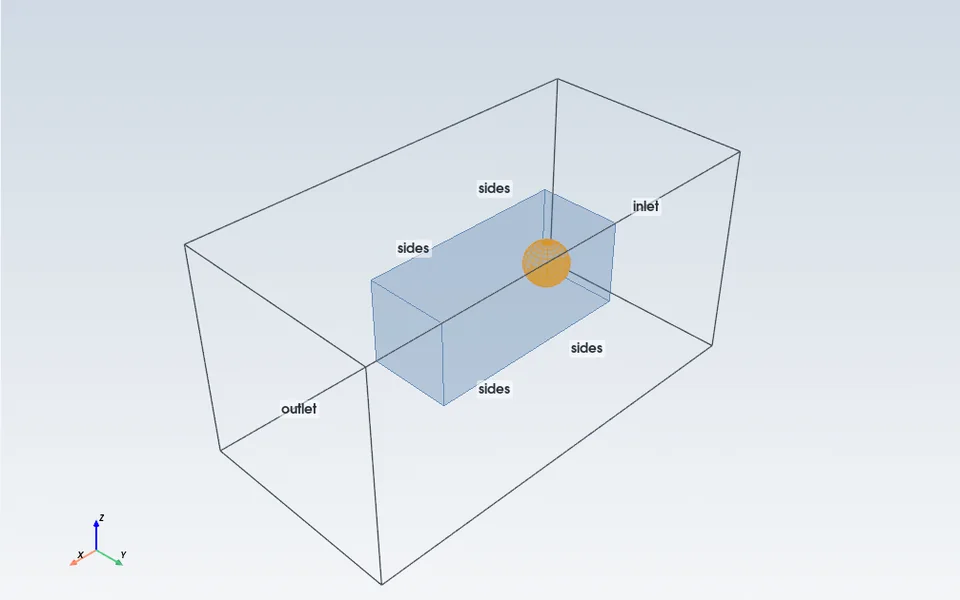
Install and first look
Set up OpenFOAM and EasyFOAM on your computer, start the program and see how it is laid out.
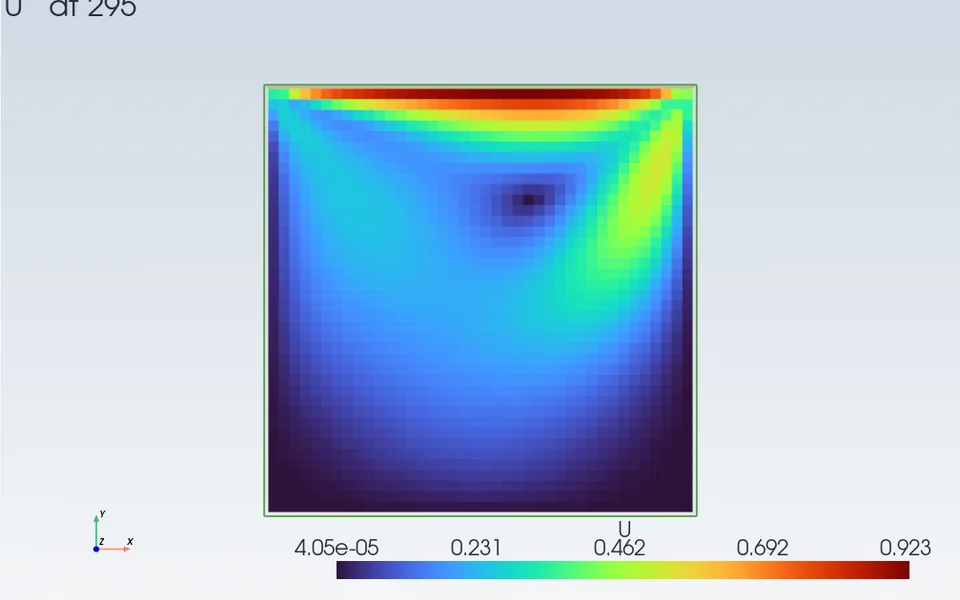
Lid-driven cavity
Your first case, built from an empty project: a closed box of fluid stirred by its sliding lid.
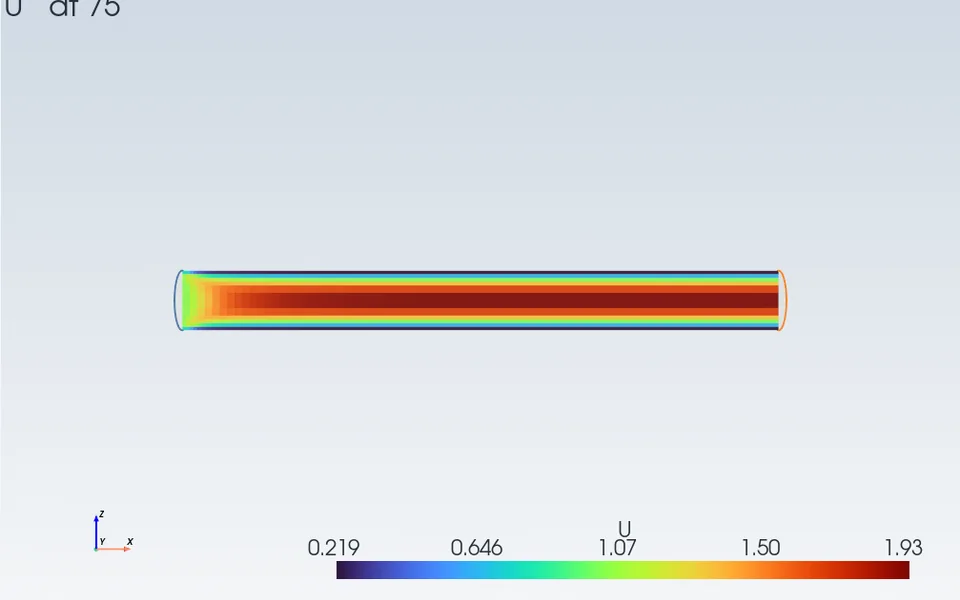
Laminar flow in a pipe
Flow inside a shape: a straight pipe whose result you can check by hand.
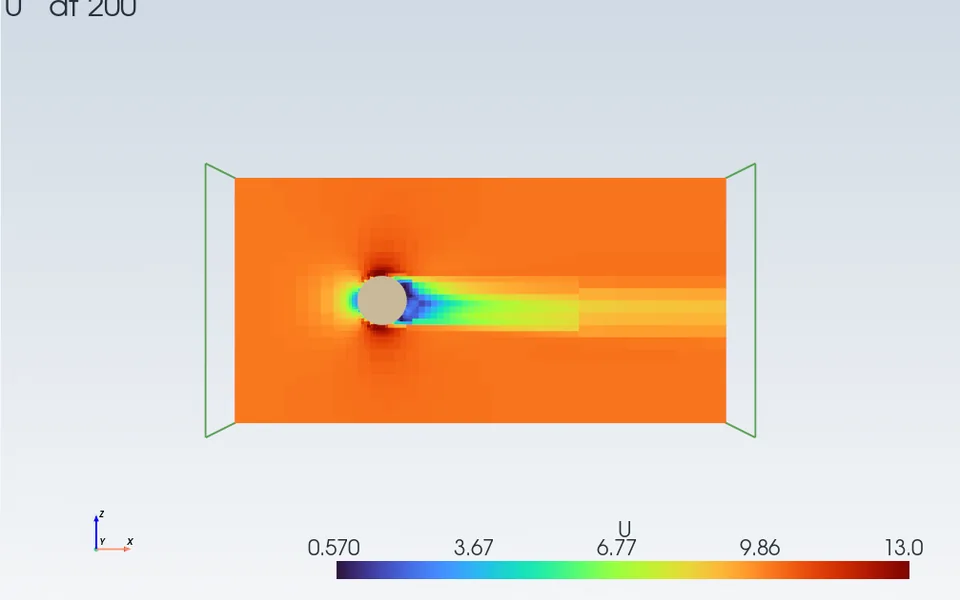
Air flow past a sphere
External flow: a body in a wind tunnel, a turbulence model, and its drag.
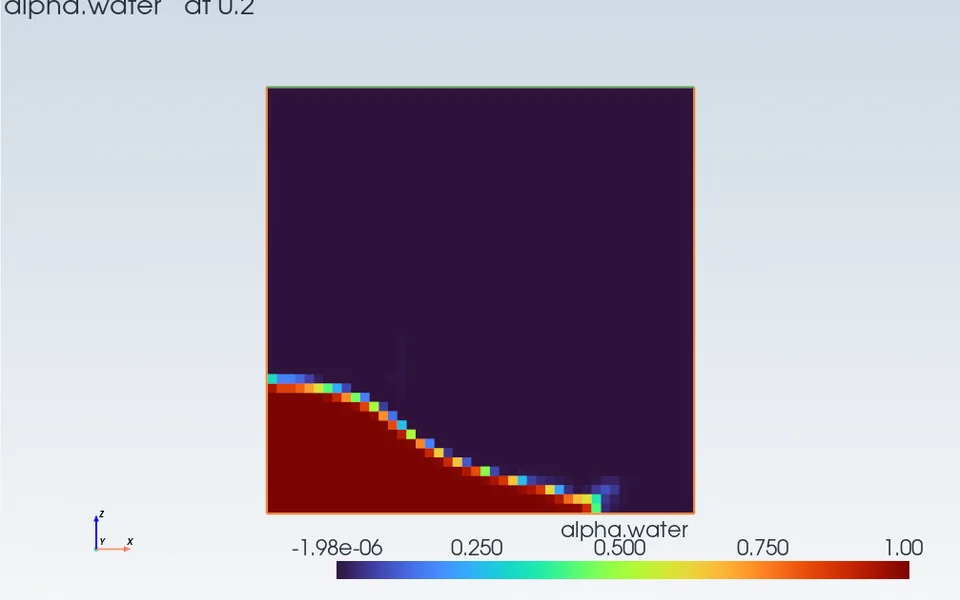
Dam break
Water and air with a free surface: a column of water collapses in a tank.
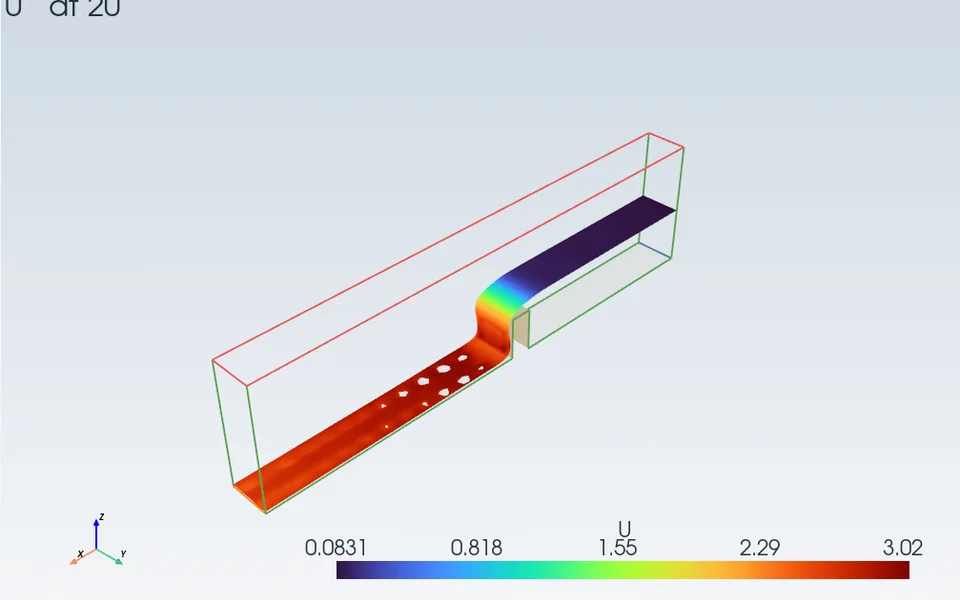
Flow over a weir
An open channel with a weir: set a discharge, measure the water level and compare it with the weir formula.
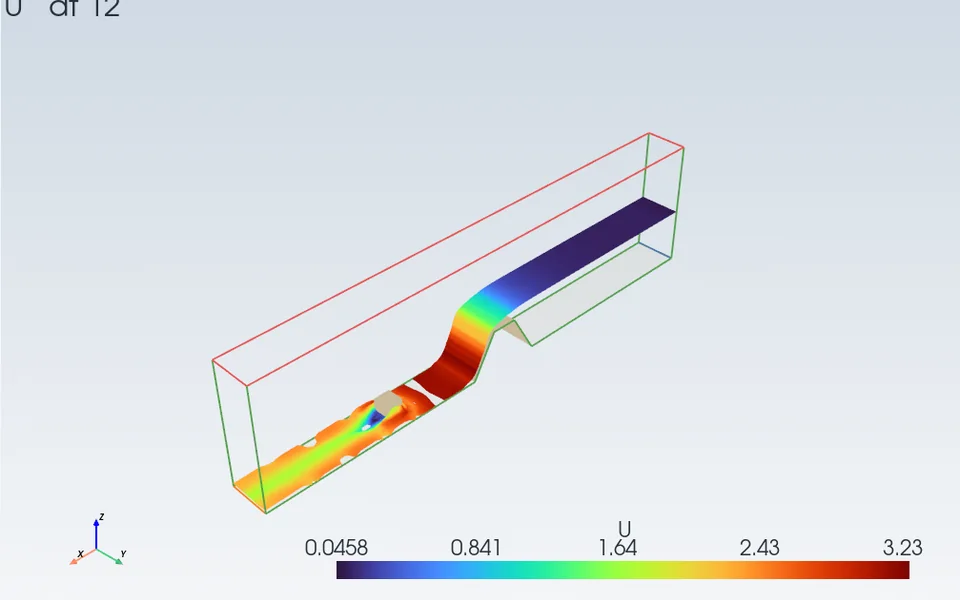
Draw your own weir
No geometry file needed: sketch the cross-section of a weir with the mouse, add a block, and run the flow over them.
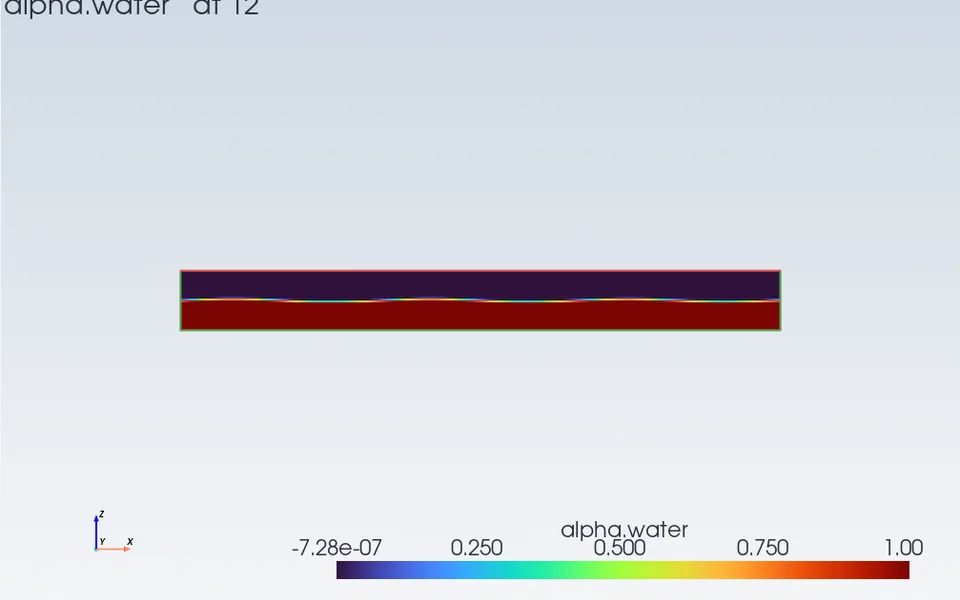
Waves in a flume
Make regular waves at one end of a flume, absorb them at the other, and measure them on the way.
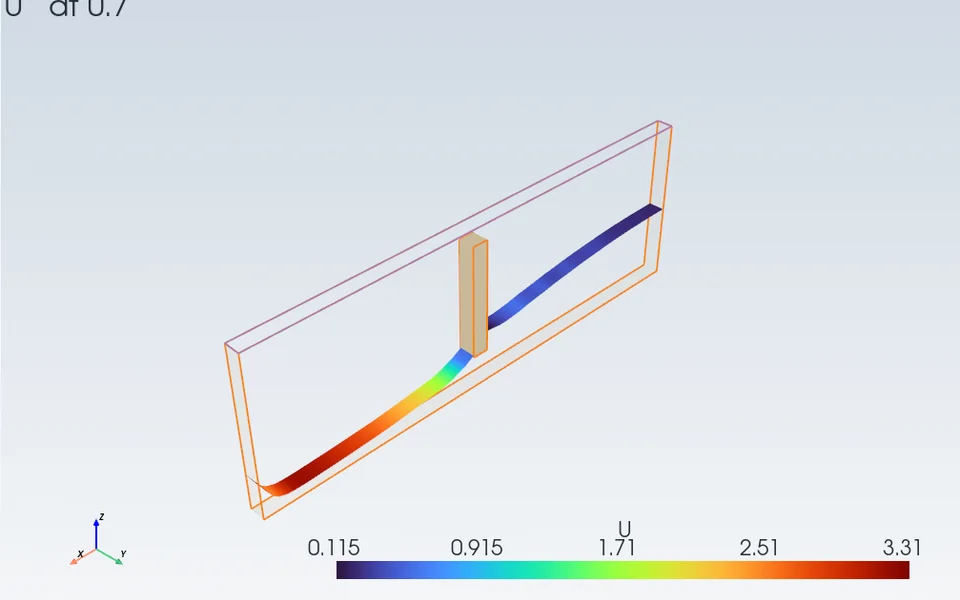
Lifting sluice gate
A shape that moves during the run: a gate lifts and the water behind it runs out underneath.
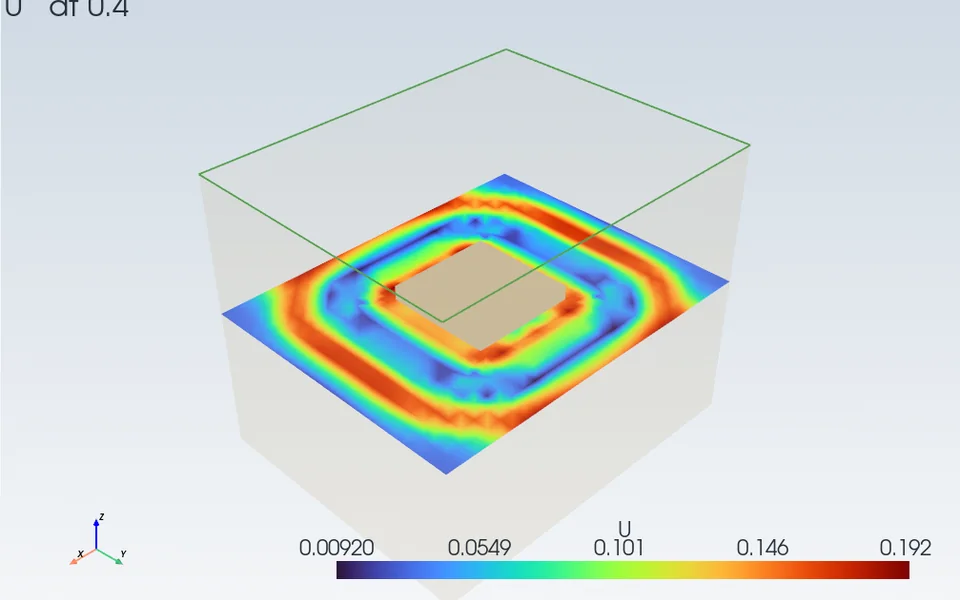
Floating box
A body that the water moves: a box is let go a little too high and bobs until it floats at rest.
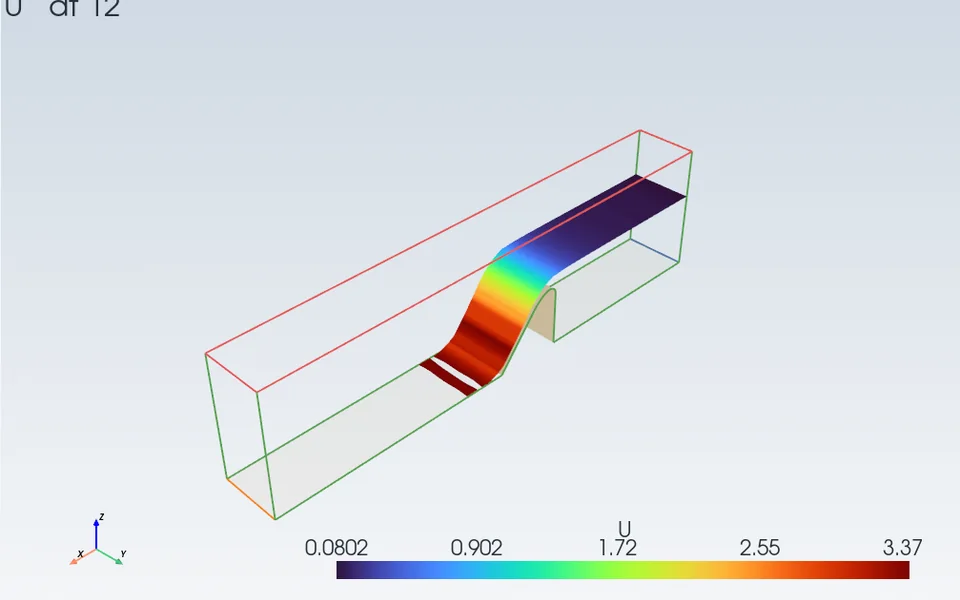
Spillway from your own geometry
Import an STL file of an ogee spillway and build the whole free-surface case around it from an empty project.
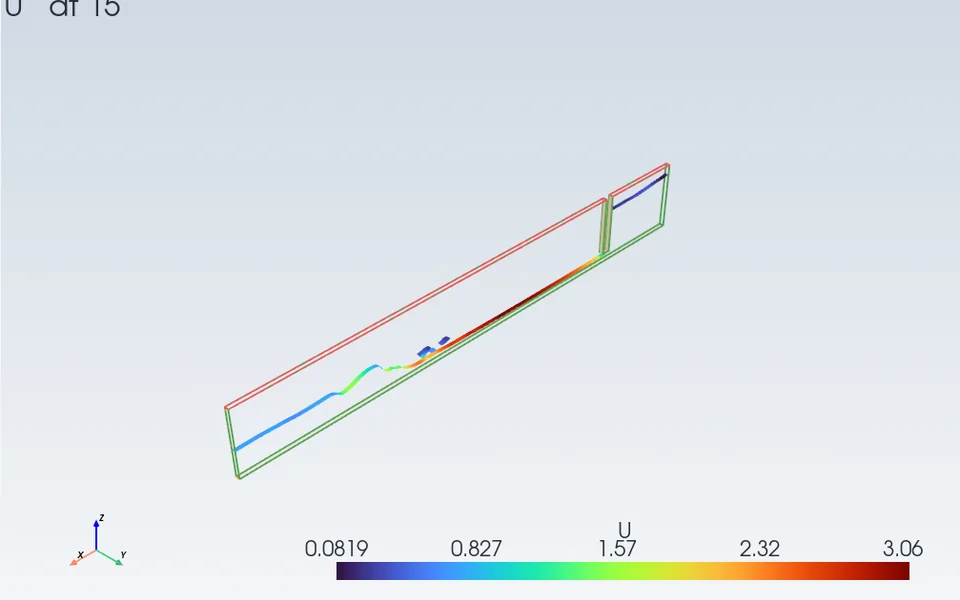
Hydraulic jump: long section and loads
Water shoots under a sluice gate and jumps back up. Find the jump, check it against Bélanger and work out the force on the gate.
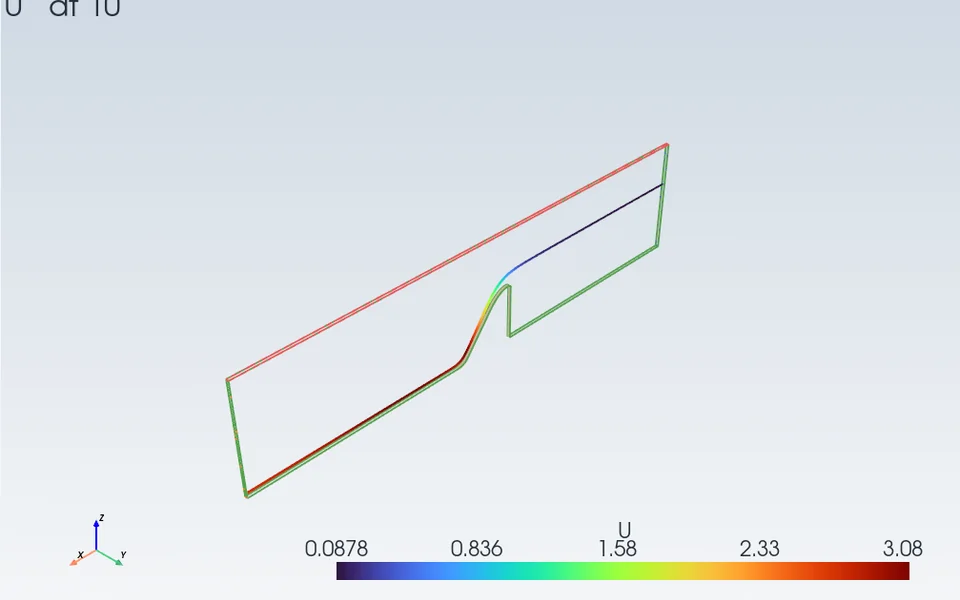
Ogee spillway crest from its design head
Make a spillway crest from its design head, let EasyFOAM give its design discharge, and check that the crest runs at that head with about atmospheric pressure on it.
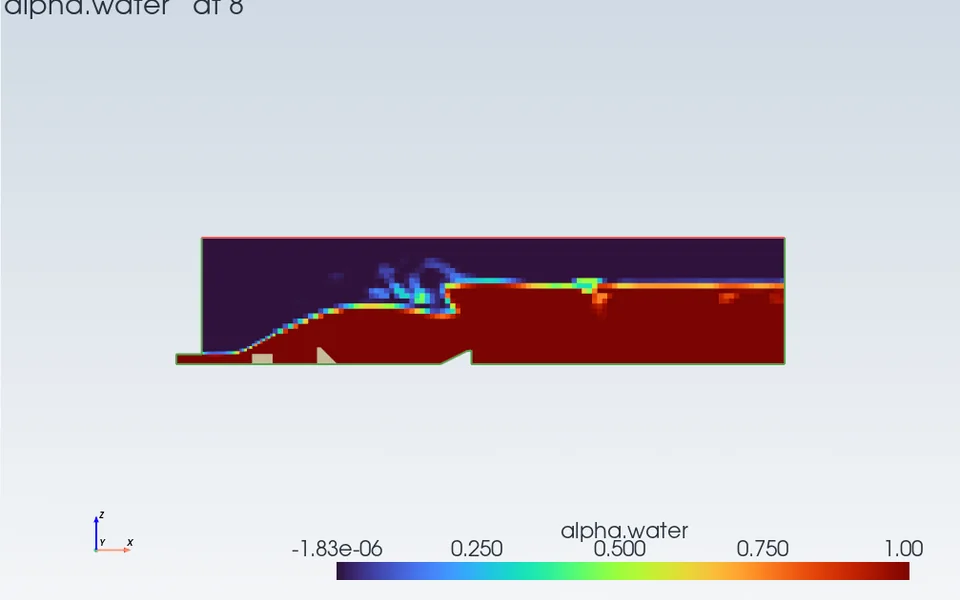
Stilling basin from the flow entering it
Make a USBR Type III stilling basin from the depth and Froude number of the jet entering it, and see it hold the jump within 2.7 sequent depths.
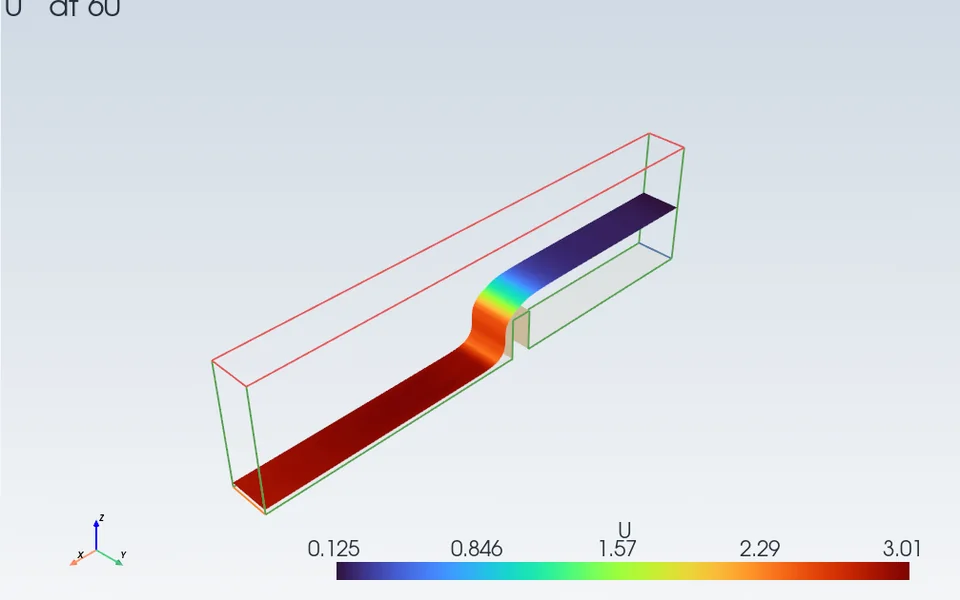
Rating curve of a weir
Step the inflow through three discharges in one run and read off the head over the weir, its weir coefficient and whether each level settled.
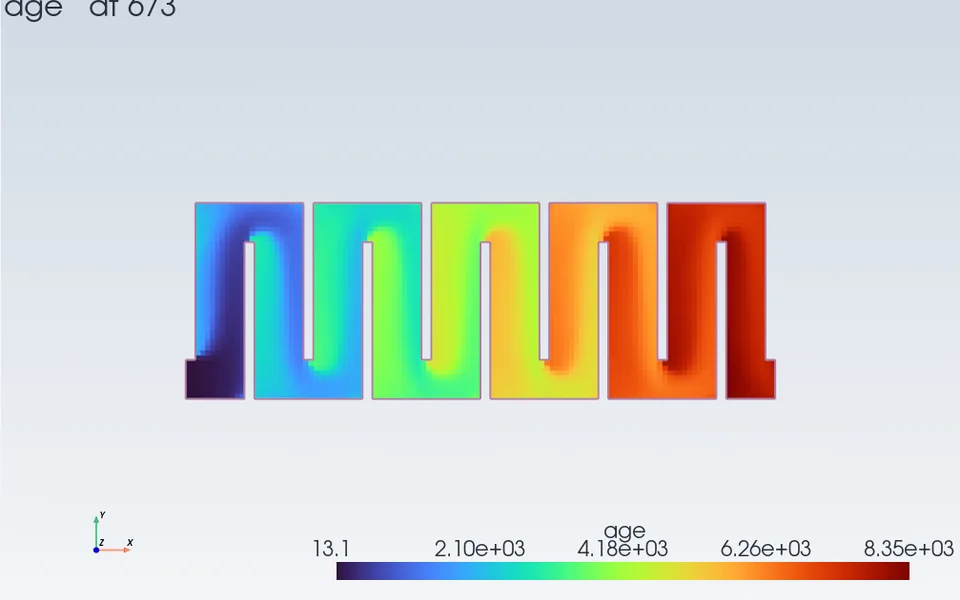
Contact tank: water age and a tracer test
How long does the water stay in a baffled chlorine contact tank? Map its age, follow a tracer through it and read off T10 and the baffling factor.
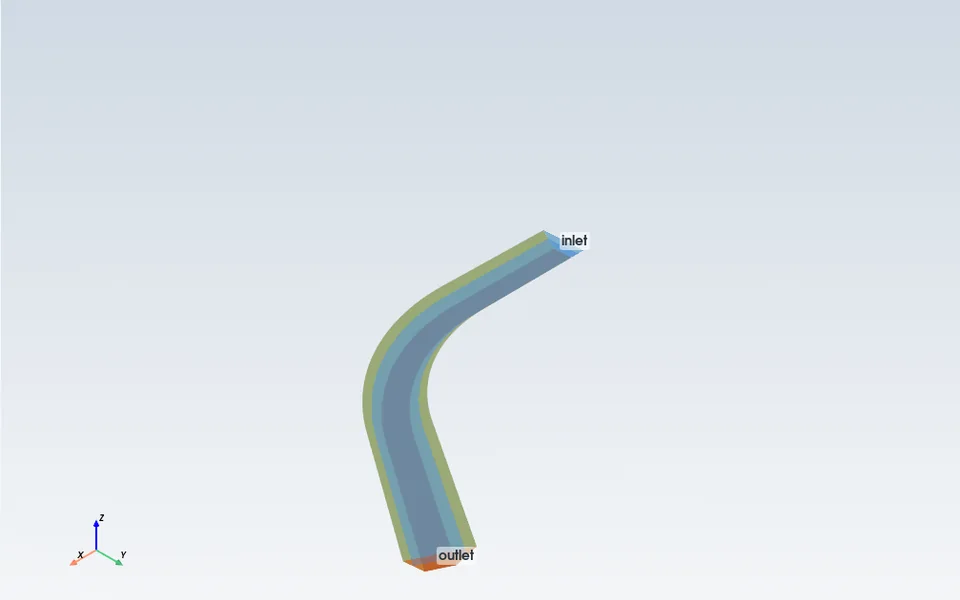
Build a channel with a bend
Draw a trapezoidal channel with a bed slope and a 60° bend, let EasyFOAM mesh it to fit, and follow the water round the bend in a long section.
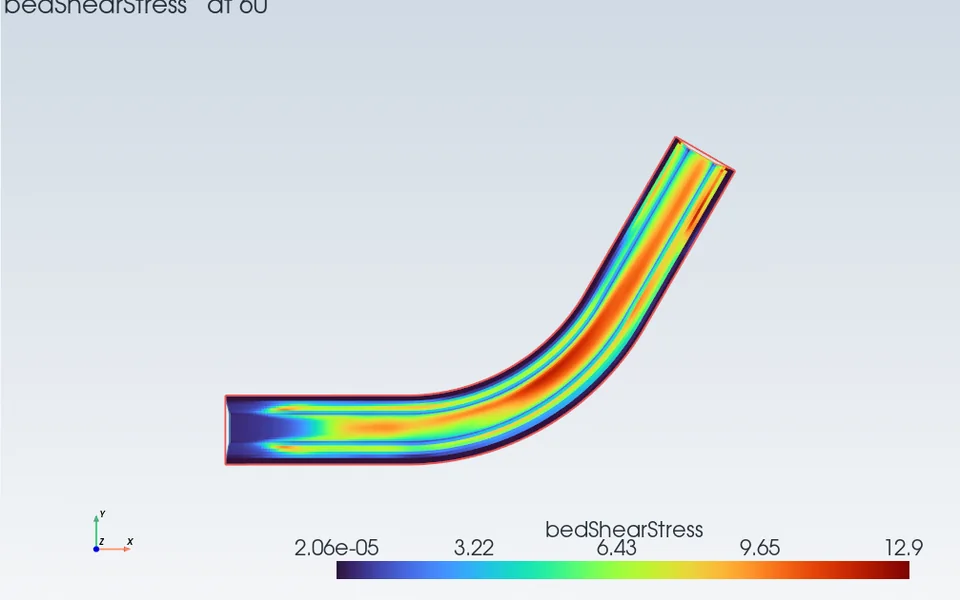
A flood through a bend
Send a flood hydrograph down a channel while the river downstream rises, follow the water round the bend and see where the bed would start to move.
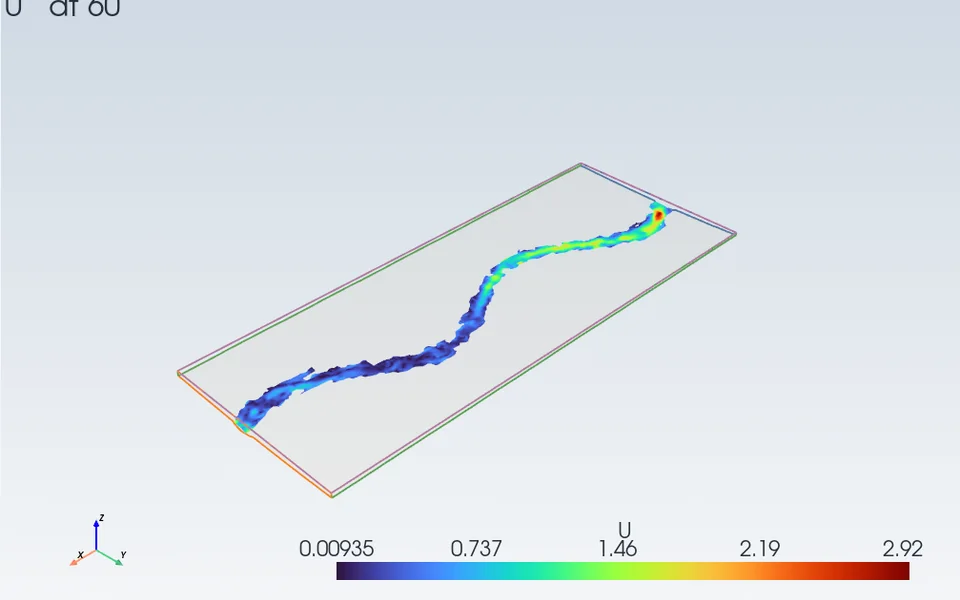
A river reach from a survey
Bring in the ground of a valley from an ESRI ASCII grid, turn it so the river runs along x, and send a flow down its meandering channel.
No tutorial on that topic yet.